
This content was aggregated from local dealer data and insights provided by the USA Today Network Automotive Insights team using Google Gemini and the Vehicles For Sale Near Phoenix marketplace writing team.
Electric vehicles offer a different driving experience from conventional gas-powered vehicles, and regenerative braking is one of the biggest differences. In the 2026 Kia EV6, regenerative braking helps recover energy as the vehicle slows. Drivers can also explore braking settings designed to change how the vehicle responds when they lift off the accelerator.
One feature that may stand out is i-Pedal, Kia's one-pedal driving setting. Instead of relying as heavily on the brake pedal during routine slowing, drivers can use accelerator-pedal input to manage acceleration and deceleration. Understanding how i-Pedal differs from other regenerative braking settings can help Phoenix shoppers decide which driving feel they prefer.
The important distinction is that i-Pedal is a particular driving approach that uses regenerative braking, while regenerative braking itself is the broader system that captures some energy during deceleration. The settings and behavior available can depend on the vehicle's configuration and software, so it's worth exploring them in the exact EV6 you're considering.
Regenerative braking uses the electric motor to help slow the vehicle. During deceleration, the motor can operate as a generator, converting some of the vehicle's kinetic energy into electrical energy that is sent back to the battery.
The driver may notice this as resistance when releasing the accelerator. The amount of deceleration depends on the selected regenerative braking level and driving conditions.
i-Pedal takes this experience further by allowing the driver to control much of the vehicle's acceleration and deceleration through the accelerator pedal. Lifting off can produce stronger slowing than a lower regenerative braking setting, potentially bringing the vehicle to a stop under appropriate conditions.
The main differences are:
Regenerative braking: The general energy-recovery process that helps slow an EV and return some energy to its battery.
Adjustable regeneration: Settings that let the driver change how strongly the vehicle slows when the accelerator is released.
i-Pedal: A one-pedal driving mode that uses stronger regenerative deceleration to reduce the need for frequent brake-pedal use in many routine situations.
One-pedal driving does not mean the brake pedal becomes unnecessary. Drivers must remain ready to use the brakes when needed, especially for sudden stops, steep descents, or situations requiring more braking force.
The best setting is a matter of driving conditions and personal preference. Some drivers appreciate stronger deceleration in traffic, while others prefer a more gradual coast when they lift off the accelerator.
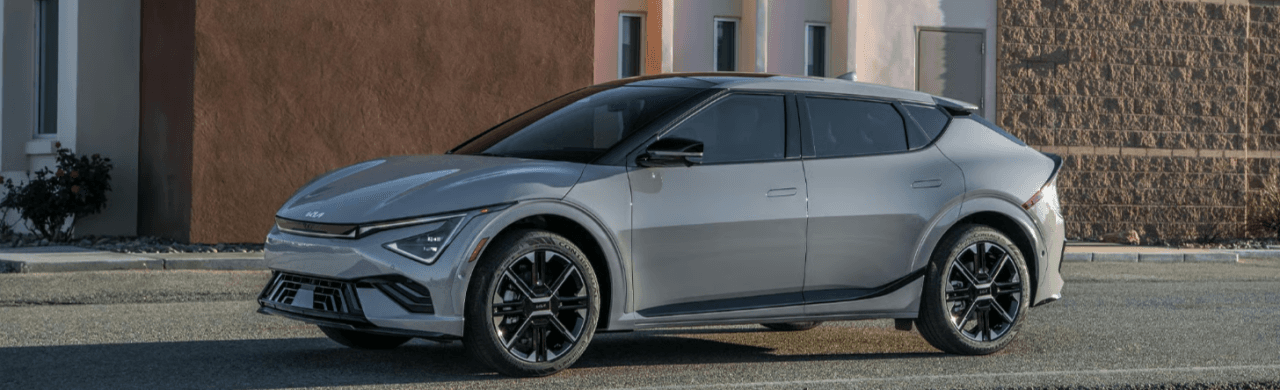
The 2026 Kia EV6 combines electric propulsion with selectable driving and regenerative braking behaviors. These systems can influence how the vehicle feels in traffic, on open roads, and during everyday commutes.
When exploring the EV6, pay attention to the following areas:
Regenerative braking levels and how they change deceleration.
The availability and operation of i-Pedal in the specific vehicle.
How steering-wheel controls or vehicle menus are used to adjust settings.
Whether the vehicle's behavior changes with different drive modes.
How the system responds as the battery approaches a high state of charge.
How the vehicle behaves during low-speed maneuvering and parking.
The relationship between regenerative braking and conventional friction brakes.
Regenerative braking does not recover every bit of energy used to accelerate. Energy conversion has limits, and the amount recovered depends on factors such as speed, battery conditions, and how the vehicle is driven.
Battery charge level can also affect regenerative braking behavior. When the battery has limited capacity to accept additional energy, the vehicle may adjust regeneration. Drivers should consult the owner's manual for details about the system's operation and any displayed messages.
It is also important to distinguish regenerative braking from the vehicle's conventional braking system. Regeneration can help slow the EV, but the friction brakes remain essential for dependable stopping. Drivers should use the brake pedal whenever conditions require it.
The most useful setting depends on where and how you drive. A driver who spends considerable time in stop-and-go traffic may enjoy i-Pedal because it can reduce repeated transitions between the accelerator and brake pedals. Someone who frequently drives at steady highway speeds may prefer a lighter regenerative braking level that allows more coasting.
Consider these everyday situations:
Busy traffic: Stronger regeneration may make it easier to manage repeated slowdowns.
Open roads: A lower setting may feel more natural to drivers who prefer the vehicle to coast when they lift off.
Parking areas: Learn how the vehicle responds at low speeds before using one-pedal driving in tight spaces.
Long downhill stretches: Understand the available regeneration settings and follow the owner's manual's guidance.
Unfamiliar roads: Use a setting that gives you predictable control and leave enough room to respond to changing traffic.
A useful test-drive checklist should include trying more than one regenerative braking level in a safe, familiar setting. Notice how quickly the vehicle slows when you release the accelerator, how smoothly it transitions between acceleration and deceleration, and how easy it is to adjust the setting.
Ask the dealer to demonstrate i-Pedal and explain how to change the regenerative braking level. Also ask whether the vehicle's behavior changes under particular battery or driving conditions. A demonstration in the actual vehicle is more useful than assuming every EV6 configuration operates identically.
Phoenix drivers may encounter a mix of freeway commuting, congested surface streets, and longer drives across the Valley. Regenerative braking can be useful in situations involving repeated slowing, but it does not remove the need to plan ahead or drive smoothly.
In heavier traffic, i-Pedal may help reduce the number of times you move between pedals. On faster roads, you may prefer a setting that allows more gradual deceleration. Try both approaches during a test drive to understand which feels comfortable.
Arizona heat is another consideration for EV ownership. High temperatures can affect battery conditioning and energy use. Regenerative braking behavior may also vary depending on battery conditions, so drivers should pay attention to vehicle messages and follow Kia's operating guidance.
Before choosing an EV6, consider:
Your typical daily distance and driving routes.
Whether you spend more time in city traffic or on highways.
How comfortable you are with one-pedal driving.
Whether you can charge conveniently at home or at another regular location.
How the vehicle's driving settings behave during your test drive.
Whether the owner's manual explains the settings and operating limitations clearly.
Shoppers can explore Kia EV6 listings near Phoenix while comparing available vehicles and equipment. Horne Kia serves the Phoenix marketplace. Ask the dealership to demonstrate the regenerative braking controls and i-Pedal operation in the specific 2026 EV6 you're considering.
No. Regenerative braking is the broader process of recovering some energy as the vehicle slows. i-Pedal is a one-pedal driving mode that uses stronger regenerative deceleration to help drivers manage acceleration and slowing primarily through the accelerator pedal.
i-Pedal is designed to provide strong deceleration and can bring the vehicle to a stop under appropriate conditions. Drivers should still understand the system's limitations, monitor traffic, and use the brake pedal whenever necessary. Consult the owner's manual for the exact operating behavior.
The EV6 provides selectable regenerative braking behavior, allowing drivers to change how the vehicle slows when they release the accelerator. The available settings and controls should be confirmed in the specific vehicle. Ask for a demonstration during your test drive.
Regenerative braking can recover some energy during deceleration and return it to the battery. It does not replace plugging in to charge, and it cannot recover all the energy used to accelerate. The amount recovered varies with driving conditions and battery state.
There is no single best setting for every driver. Stronger regeneration may feel useful in stop-and-go traffic, while lighter regeneration may suit drivers who prefer more coasting on open roads. Try different settings safely and choose the behavior that feels predictable and comfortable.