
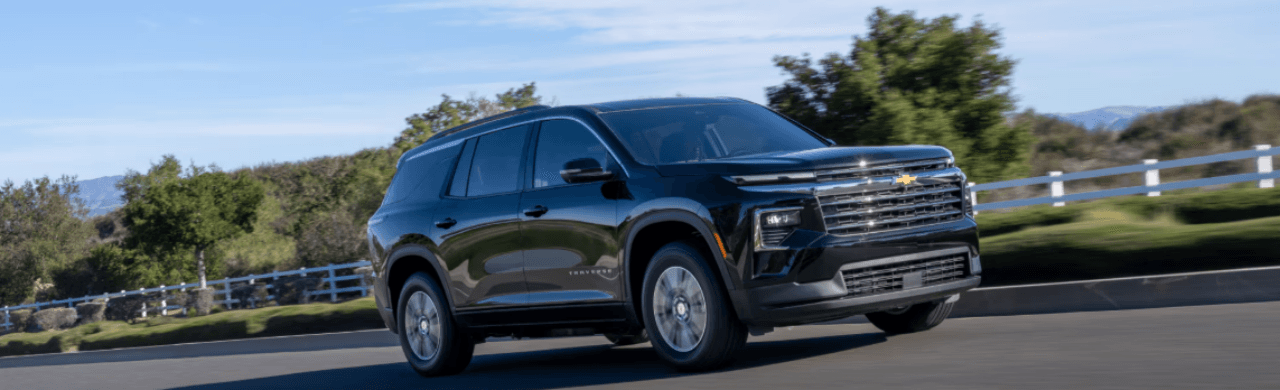
This content was aggregated from local dealer data and insights provided by the USA Today Network Automotive Insights team using Google Gemini and the Vehicles For Sale Near Phoenix marketplace writing team.
When comparing three-row SUVs, fuel economy is an important part of estimating long-term ownership costs. But a vehicle's city and highway MPG figures are not interchangeable. They reflect different driving conditions, and the difference can affect how much fuel you use during your regular week.
For Phoenix-area shoppers considering the 2027 Chevrolet Traverse, understanding city versus highway fuel economy can make it easier to estimate fuel expenses. A driver who spends most of the week in stop-and-go traffic may see different results from someone whose commute involves longer stretches of steady freeway driving.
The most useful approach is to understand what affects fuel consumption, review the official ratings for the exact vehicle, and compare those figures with your own driving habits.
City and highway fuel economy figures reflect different patterns of vehicle use. City driving generally involves more stops, starts, idling, and changes in speed. Highway driving often allows a vehicle to maintain a more consistent pace for longer periods.
Those differences influence how much energy the engine uses. Accelerating from a stop requires energy, and repeated acceleration can increase fuel consumption. Traffic lights, congestion, short trips, and extended idling can all affect city mileage.
Highway driving may be more consistent, but it does not guarantee a particular MPG result. Higher speeds, strong acceleration, road grades, wind, and heavy loads can all influence fuel use.
For a three-row SUV such as the Traverse, consider the following factors:
How often you drive in stop-and-go traffic.
The amount of freeway driving in your weekly routine.
Typical travel speeds and traffic congestion.
How frequently you carry passengers or cargo.
Whether your routes include hills or significant elevation changes.
How often you make short trips before the engine reaches normal operating temperature.
The EPA city and highway estimates provide standardized comparison figures. They are useful when comparing vehicles, but they are not a promise of the mileage every owner will achieve. Confirm the official 2027 Chevrolet Traverse ratings for the exact configuration you are considering.
Fuel economy is only one part of evaluating the Traverse. Buyers should also consider how the SUV's powertrain, size, passenger accommodations, and available equipment fit their needs.
A three-row SUV may be useful for households that regularly carry several passengers or need flexible cargo space. However, the way a vehicle is equipped and used can influence its fuel consumption. Different configurations, drivetrain choices, tires, and vehicle loads may affect the results.
When reviewing the 2027 Traverse, verify:
The official engine and transmission specifications.
The drivetrain configuration.
EPA-estimated city, highway, and combined fuel economy.
The trim and equipment included on the specific vehicle.
Manufacturer recommendations for fuel and maintenance.
Any configuration-specific differences that may affect efficiency.
Do not rely on ratings from an earlier model year or another trim as a substitute for the official 2027 information. Ask the dealership for documentation that matches the vehicle you are considering.
A test drive can also help you understand how the Traverse fits your driving routine. Notice how it accelerates in traffic, how comfortable it feels at freeway speeds, and whether the seating and visibility work for you. If possible, drive on a mix of local streets and faster roads to experience different conditions.
Fuel is an ongoing ownership expense, but it is not the only cost to consider when buying a three-row SUV. A realistic budget should account for the purchase price and the recurring expenses associated with keeping the vehicle.
Fuel costs are easier to estimate when you know your approximate annual mileage and have a reasonable MPG assumption. You can use the official combined rating as a starting point, then adjust your expectations based on how much city and highway driving you actually do.
A simple estimate works like this:
Estimate how many miles you drive in a typical year.
Divide that distance by your expected MPG.
Multiply the gallons required by your estimated fuel price.
Revisit the estimate if your commute or fuel prices change.
For example, a driver who travels mostly in city traffic should not automatically budget using the highway rating. Similarly, someone who drives long freeway distances should consider whether their actual speed and route conditions differ from the assumptions behind the EPA estimate.
Other ownership expenses may include:
Insurance premiums.
Registration and applicable taxes.
Routine maintenance and replacement items.
Tires and other wear-related costs.
Financing charges, if applicable.
Parking, tolls, and other regular travel expenses.
The Traverse's size and seating capacity may be valuable to your household, but compare those benefits with the complete cost of ownership. Request insurance estimates and review manufacturer maintenance guidance before making a final decision.
Phoenix-area driving can involve a combination of busy surface streets, freeway commutes, and longer trips across the Valley. That mix makes it important to consider how much of your driving is urban versus highway travel.
If your week includes frequent traffic around shopping areas, schools, and major intersections, city driving may represent a significant share of your mileage. If you regularly travel longer distances between communities, highway driving may account for more of your total use.
Hot weather is another factor to consider. Air-conditioning demand can affect fuel consumption, particularly during very warm periods. Long periods of idling, heavy traffic, and short trips can also influence real-world results.
Before buying, think through your regular routine:
Estimate weekly mileage rather than relying on one commute.
Separate city driving from longer freeway journeys.
Consider how often you carry passengers and cargo.
Review official fuel-economy ratings for the exact configuration.
Compare expected fuel costs using realistic local driving assumptions.
Ask about maintenance requirements and recommended service intervals.
A three-row SUV should also be evaluated for the way your household will use it. Check access to the third row, passenger comfort, cargo room with seats in different positions, and visibility in parking areas.
Phoenix shoppers can begin comparing available vehicles by reviewing Chevrolet Traverse listings near Phoenix. Confirm current availability, equipment, and vehicle details with the dealership before making plans to visit.
Earnhardt Chevrolet serves the Phoenix marketplace. When discussing a 2027 Traverse, ask for the official fuel-economy information and specifications for the exact vehicle. Comparing those details with your driving habits can help you develop a more realistic ownership budget.
City driving generally involves more stopping, starting, idling, and acceleration, all of which can increase fuel consumption. Highway driving often involves steadier speeds, although high speeds, wind, road grades, and heavy loads can also reduce efficiency. The difference depends on the vehicle and driving conditions.
Use the official EPA fuel-economy ratings for the 2027 Traverse and the exact configuration you are considering. Ratings can vary by vehicle configuration, so confirm the figures through Chevrolet or the vehicle's official fuel-economy documentation rather than relying on another model year.
Hot weather and frequent air-conditioning use can influence fuel consumption. Traffic, idling, trip length, and driving speed also matter. Your actual mileage will depend on how and where you drive, so use official ratings as a comparison guide rather than a guaranteed result.
Estimate your annual mileage, divide it by a realistic MPG figure, and multiply the resulting gallons by your expected fuel price. Use the city and highway mix that best reflects your routine. Revisit the calculation when your commute, driving habits, or fuel prices change.
Compare the exact vehicle's configuration, official fuel-economy ratings, equipment, condition, and purchase price. Also evaluate passenger and cargo space, test-drive comfort, maintenance requirements, insurance costs, and financing terms. A complete comparison provides a better ownership picture than MPG alone.